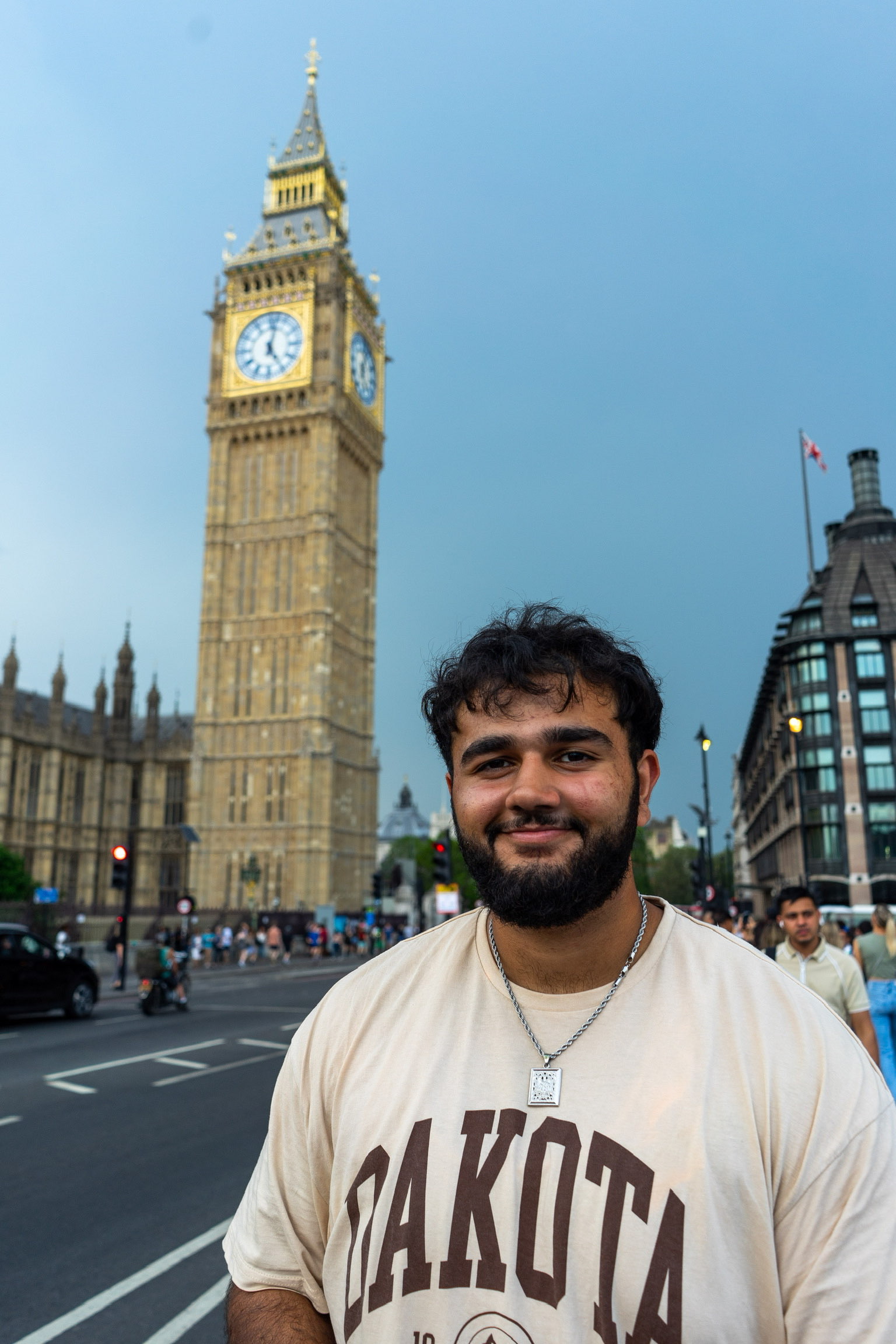
Passionate about AI/ML research, full-stack development, and creating innovative solutions. Currently pursuing BS in Computer Science at Louisiana State University.
I'm a Computer Science student at Louisiana State University with a passion for artificial intelligence, machine learning, and full-stack development. As an LSU Stamps Scholar and member of Tau Beta Pi Engineering Honors Society, I maintain a 4.25 GPA while actively engaged in cutting-edge research at the AISX Lab.
My work bridges academic research and real-world impact. Currently, I'm developing PECAN (Programming Encoder Classification Analysis Network), achieving 99.5% accuracy in programming language identification across 319 languages. Beyond research, I've deployed AI systems serving over 30,000 users at LSU, demonstrating my commitment to practical applications of technology.
I believe in servant leadership and using technology as a force for social good. Whether it's developing clean water awareness through my webmaster role at LSU Water Brigades or creating accessible AI tools for the LSU community, my goal is to leverage technical expertise to address meaningful challenges and improve people's lives.
BS Computer Science - Software Engineering
Minor in Mathematics
Expected Graduation: May 2026
LSU Stamps Scholarship Recipient
Taylor Scholar (TOPS) Recipient
Tau Beta Pi Engineering Honors Society
AI/ML, Natural Language Processing
Transformer Models, Software Engineering
Programming language identification
I co-lead MikeGPT, LSU's campus AI assistant. I worked on the Retrieval-Augmented Generation pipeline, prompt library, and release process that keep 35K+ students, faculty, and staff confident in every answer. Along with this, I also worked on the evaluation systems to main its accuracy.
Partnered with Dr. David Shepherd's lab to prototype a Meta Quest 3 environment that keeps desk work active. I designed gesture-driven shortcuts and validated usability with early testers.
Built a security-first Blazor application with LDAP authentication, role-based access controls, and encrypted messaging to simulate enterprise-grade collaboration.
Architected and implemented a full compiler in Java using JLex and CUP—covering lexical analysis, parsing, semantic checks, and code generation for an extended ANSI C spec.
I walked the LSU community through MikeGPT's impact story, translating our technical stack into clear takeaways for faculty, staff, and students.
Citation: Alam I, Nguyen J. MikeGPT: Enhancing LSU with AI. LSU Discover Day Undergraduate Research and Creativity Conference. 2025 April 25; Louisiana State University, Baton Rouge, Louisiana.
This lecture snippet from CSC 4700 shows how I coach students through retrieval and model evaluation.
Embed blocked on your network? Watch directly on YouTube. Hosted privately (unlisted) so only viewers with this link can access it.
I summarize how our lightweight encoder architecture reaches 99.5% accuracy across 319 languages while staying accessible to student teams.
Read the summary →This write-up captures the prompts, governance flow, and data protections I designed so campus leaders understand how we ship safely.
Dive into the architecture →
This one-page visual helps stakeholders see how the Workday Agent greets a question, finds context, and responds without diving into code.
I showcase the climate accountability story we built for Nexus Louisiana, showing how the dashboard keeps policymakers grounded in local data.
This tour highlights the interactive campus map prototype I art-directed to help future LSU students plan days, capture memories, and re-live campus moments.
I produced and narrated a satirical, documentary-inspired commercial for CSC 4330 that visualizes the pain points of public, company, and regulatory stakeholders—before unveiling our CarbonSight platform in simple, compelling terms.
Watch on YouTube →My leadership philosophy centers on servant leadership, collaborative problem-solving, and using technology to create positive social impact. These experiences demonstrate my commitment to ethical leadership and community service.
Leadership means building spaces where technology elevates people. The question that hooked me while reading I, Robot—does AI enhance or dull human creativity?—still guides how I show up for teams. I want every system I touch to amplify the people around it.
That belief turns into servant leadership in practice. Leading the ClimateTech Challenge, coaching CSC 4700 teams, and serving Water Brigades all require the same moves: listen first, translate complexity, and remove blockers so others can contribute confidently.
Whether I'm briefing campus leadership on MikeGPT or pairing with a student on their first RAG pipeline, I focus on clear narratives and shared purpose. Communication isn't an add-on—it is what keeps technical rigor tethered to impact.
Leading development of Louisiana CO₂ tracking platform for $23B CCUS initiative, managing agile workflow and cross-functional team coordination.
Coordinating the ClimateTech Challenge meant translating a $23B CCUS vision into weekly sprint goals. I kept a mixed-experience team aligned by pairing clear agendas with space for open problem solving.
My biggest lesson was to facilitate instead of prescribe. When our AI pipeline clashed with the data layer, I hosted a working session that surfaced a better architecture than anything I could have dictated. That moment cemented my approach: create clarity, enable collaboration, and keep the mission—accountable climate data—front and center.
Supporting student project teams in developing AI-centric applications, providing technical guidance and facilitating learning.
CSC 4700 students build sponsor-facing AI products, so every conversation has to balance rigor with encouragement. I tailor explanations to each team—sketching visuals for some, walking through code for others, and always anchoring the why behind every modeling choice.
The most rewarding sessions are when I step back. Guiding a team through their RAG evaluation blockers with questions instead of fixes led to a breakthrough they now teach to peers. It reinforced that my job is to build independent problem-solvers, not to be the answer key.
Developed website for 100+ student club focused on global clean water initiatives, demonstrating servant leadership and commitment to humanitarian causes.
Maintaining the LSU Water Brigades site keeps a 100+ member team informed about fundraising goals, travel logistics, and impact stories. Every update is a reminder that a few hours of code can multiply the reach of peers doing hands-on clean water work.
It has become my grounding example of servant leadership: listen to what the organizers need, build the simplest tool that delivers it, and keep accessibility front-of-mind so every volunteer can stay involved.
Directed student team in building AI-powered chatbot, achieving 95% accuracy rate and serving 35,000+ users during LSU's Workday transition.
WorkdayLSU needed a chatbot immediately, so I split my days between engineering and expectation management. We hit a 95% accuracy rate by tightening retrieval quality and aggressively prioritizing the features that unblocked students first.
The pressure forced me to be explicit about trade-offs. Saying “not yet” to additional requests protected launch quality and built trust—people knew I would be honest about scope, risk, and impact.
My journey in computer science has been defined by a single question: How can AI empower rather than replace human creativity and reasoning? This thread connects every experience—from research to industry to service—weaving together a narrative about technology's role in amplifying what makes us human.
In Dr. James Ghawaly's AISX Lab, working on both MikeGPT and PECAN (formerly BetterGuessLang), I've learned that effective AI requires more than achieving high accuracy—it requires thoughtful design that considers real-world constraints. MikeGPT taught me that retrieval design matters more than model size, a lesson that directly informed my approach to PECAN. When we achieved 99.5% accuracy with a smaller encoder-only model, it validated my conviction that accessibility and performance need not be mutually exclusive. These research experiences have given me a rigorous foundation in NLP, information retrieval, and model evaluation.
My time at Tri-Core Technologies provided the software engineering foundation that transformed me from a researcher into someone who can build production systems. Working on enterprise-level full-stack systems for the Louisiana Department of Insurance, I learned that clean design, collaboration, and reliability are non-negotiable. This industrial experience became the bridge between academic research and real-world deployment. When I later became Machine Learning Software Engineer for MikeGPT—an AI assistant now serving thousands of LSU students and faculty—I could merge research insights with software engineering rigor. The result was a system that doesn't just work in theory, but delivers value to real users every day, with custom agents that bridge knowledge gaps and enhance learning.
My leadership roles have taught me that technical skills alone are insufficient—communication and collaboration amplify impact. As Scrum Master and lead developer for the Nexus Louisiana ClimateTech Challenge, I'm not just writing code; I'm facilitating team dynamics, translating technical requirements for diverse stakeholders, and ensuring our CO₂ tracking system addresses genuine accountability needs. This role pushed me to integrate everything I'd learned: research insights about AI integration, software engineering practices from Tri-Core, and collaborative leadership skills developed through teaching and service.
As a Teaching Assistant for CSC 4700, I guide student teams tackling complex problems for industry partners. This role reversed the learning dynamic—instead of just acquiring knowledge, I'm translating research and industry experience into accessible guidance. Watching students progress from confusion to confidence has reinforced that clear communication is as valuable as technical expertise.
My work with LSU Water Brigades, where I created and maintain a website for over 100 students supporting clean water initiatives, reminds me why technical skills matter. Technology should serve communities, addressing real needs and creating tangible impact. This conviction—that my skills can improve lives—shapes every project I undertake.
What unifies these experiences is my belief that AI should be a tool for augmentation, not replacement. Whether I'm fine-tuning models, building production systems, leading development teams, or supporting service organizations, I'm driven by the vision articulated in I, Robot: finding balance between machine intelligence and human creativity. My research explores how to build more effective AI systems. My industry work demonstrates how to deploy them reliably. My leadership experiences teach me how to communicate their value and ensure they serve genuine needs.
Looking forward, I see these experiences not as separate chapters, but as integrated preparation for advancing AI systems that empower human reasoning and creativity while addressing societal challenges—from education to climate accountability to equitable access to technology.
My philosophy on technology ethics is rooted in a fundamental question from I, Robot: Should AI enhance or replace human creativity? I believe this question extends beyond creativity to encompass human reasoning, judgment, and autonomy. Ethical AI development requires ensuring our systems augment rather than diminish what makes us human.
Working on MikeGPT at LSU taught me that handling user data is a profound responsibility. When building an AI assistant serving thousands of students and faculty, every architectural decision carries ethical weight. We implemented strict data handling protocols, ensuring that student queries remain private and that our retrieval system accesses only public university documents. This wasn't just about regulatory compliance—it was about honoring the trust our community placed in us. I learned that privacy isn't a feature to add later; it must be foundational to system architecture.
In developing PECAN, training on 42+ million code samples across 319 languages, I've grappled with questions of representation and bias. Which programming languages receive priority? How do we ensure our model performs equitably across different coding styles and conventions? These aren't just technical challenges—they're ethical ones. We've worked deliberately to ensure diverse language representation, recognizing that algorithmic fairness requires intentional design choices, not just technical optimization.
Leading the ClimateTech Challenge reinforced the importance of accountability in AI systems. When building tools to track CO₂ emissions for Louisiana's $23 billion CCUS initiative, transparency isn't optional—it's essential for public trust and environmental accountability. This project taught me that AI systems addressing societal challenges must be explainable, auditable, and subject to meaningful oversight.
My commitment to using technology for public benefit—from MikeGPT's educational support to Water Brigades' humanitarian outreach—stems from believing that technical expertise carries social responsibility. AI should address genuine human needs, not just demonstrate technical prowess. This means asking difficult questions: Who benefits from this technology? Who might be harmed? How can we ensure equitable access?
The balance I seek between human creativity and machine intelligence is fundamentally an ethical stance. It's a commitment to building AI systems that empower people, respect privacy, promote fairness, and serve communities—technology that enhances rather than replaces what makes us human.
I'm always interested in discussing new opportunities, research collaborations, or innovative projects. Feel free to reach out!